
By Chris Walker
This article was originally published by Truthout
The White House maintains that the pro-Trump ads paid for by the government are merely “public service announcements.”
President Donald Trump is facing fierce criticism over taxpayer-funded TV ads featuring wording from his campaign speeches that aired just five weeks before the midterm elections.
The ads do not make a direct call for voters to support specific candidates or Republicans in November. The White House is using that fact to maintain that the ads are not political, but rather “public service announcements.”
“President Trump is not on the ballot,” read a White House statement defending the spots.
But that justification ignores that Trump is regularly encouraging voters to pretend that he is on the ballot, doing so at recent campaign rallies and even in a Monday morning Truth Social post, published just a day after the White House statement.
“The timing cannot be ignored: five weeks ahead of congressional elections in which Republicans fear defeat in the House and the Senate,” CNN senior political reporter Stephen Collinson said in an analysis of the commercials. “The video’s hero narrative is exactly the kind of messaging that might drive out quintessential Trump voters whom the GOP needs to turn out in droves, even when Trump isn’t formally heading midterm tickets.”
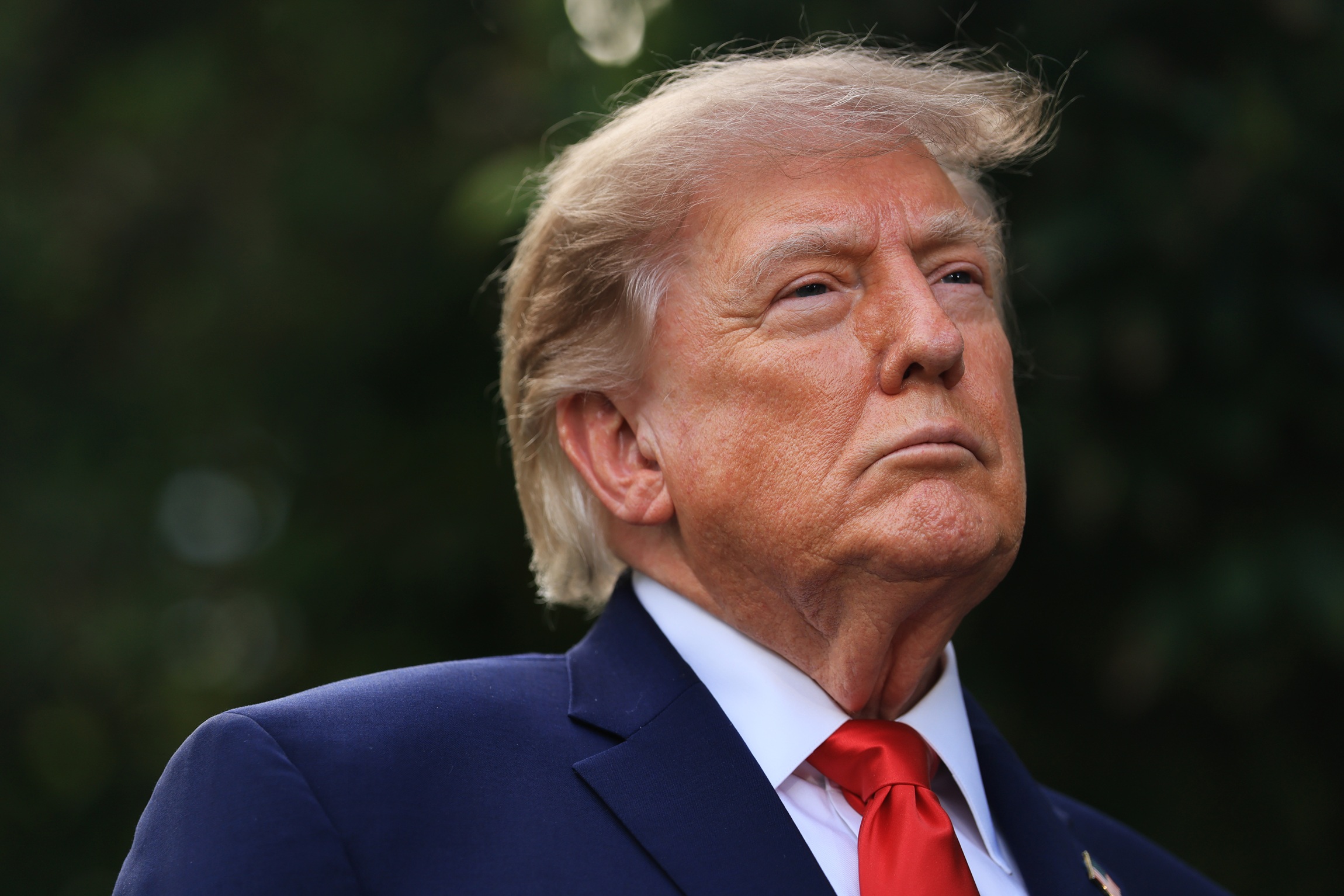
The most recent ad, which aired during sporting events and other highly viewed television programs over the weekend, features a black-and-white video of Trump walking toward the camera, staring directly into it. As he does so, audio of a 2024 stump speech by Trump plays, in which he asks voters to join him in a “final battle” to take on the so-called “deep state” and expel “warmongers” from the government. Trump also attacks supposed “communists” and “globalists, Marxists, and fascists” in government, and promises to go after the “fake news media.” He then pledges to “liberate America.”
The ad includes a disclaimer at the bottom: “Paid for by the U.S. Government.”
A separate ad that ran prior to the weekend ad featured similar wording from Trump superimposed over the song “Love Me” by JMSN. (The artist says he never gave clearance for the government to use his work, and is consulting lawyers about the matter.) The ad concludes with comments from Ultimate Fighting Championship CEO Dana White describing Trump as “tough” and “resilient.”
Critics have questioned the legality of the ads.
“The president and his administration have gone from breaking the law to trampling it,” said Norm Eisen, a former Obama-era White House ethics lawyer and frequent critic of Trump.
“The law is clear: you cannot use taxpayer dollars for political advertisements,” Rep. Steny Hoyer (D-Maryland) wrote in a Facebook post. “Trump’s ad is an egregious and utterly illegal misuse of Americans’ hard-earned tax dollars. This ad must immediately be taken off the air, and those responsible must be appropriately reprimanded for this violation.”
The criticism of the government-funded commercials crossed partisan lines.
“Don’t worry, using taxpayer dollars to run ominous campaign ads of the President has been done before and is completely legal… in banana republics,” Rep. Thomas Massie (R-Kentucky) wrote on social media.
Although he tempered his criticism somewhat, Sen. John Kennedy (R-Louisiana) also took issue with Trump’s commercials.
“I don’t think any public official, including President Trump or Kristi Noem or John Kennedy, should spend public money … on private ads for themselves,” he said in an interview on Sunday. “The White House sees it differently. But … I think there ought to be a rule that you can’t – well, there probably is a rule – you can’t spend public money to promote yourself.”
Richard Painter, a former White House ethics lawyer under President George W. Bush, was more pointed in his condemnation of the ads.
“This is very dangerous. We do not allow government-sponsored propaganda in the United States,” he said, calling the commercials an “abuse of power” that could amount to “an impeachable offense.”
This article was originally published by Truthout and is licensed under Creative Commons (CC BY-NC-ND 4.0). Please maintain all links and credits in accordance with our republishing guidelines.