
The discovery could lead to more targeted treatments that reduce inflammation linked to high blood pressure.
For nearly half of U.S. adults who have high blood pressure, controlling the condition can be a persistent challenge. Researchers at the University of Missouri are investigating whether a protein called TG2, found in blood vessels and certain immune cells, could offer a new target for treatment.
In a study of female mice, removing TG2 from those immune cells reduced the rise in blood pressure, arterial stiffness, and inflammation triggered by a hormone called angiotensin II. The findings suggest that targeting the protein could help address inflammation that contributes to high blood pressure, also known as hypertension.
Hypertension increases the risk of heart attacks and strokes. Although the disease has many contributing factors, identifying the biological processes behind it could give researchers more specific ways to intervene.
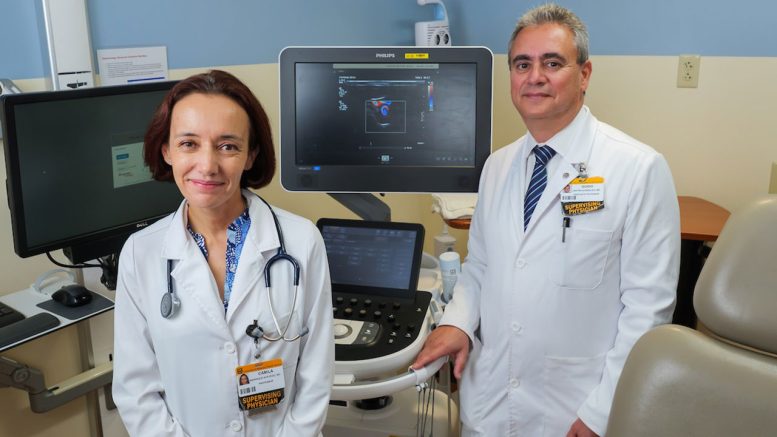
“High blood pressure increases the risk of cardiovascular disease tremendously, and while there are effective medications out there, many people still struggle to control their hypertension,” said Camila Manrique-Acevedo, a professor at the university’s School of Medicine and an investigator at Roy Blunt NextGen Precision Health. “If we can better understand the underlying mechanisms contributing to hypertension in the first place, perhaps that can one day lead to more precise treatments with potentially fewer side effects.”
Removing TG2 blunted the pressure rise
TG2 had already been linked to arterial stiffening through research on blood vessels. But the protein is also present in immune cells that help regulate inflammation, raising a question about whether its activity in those cells contributes to hypertension.
To investigate, Manrique-Acevedo collaborated with Guido Lastra, an associate professor in the School of Medicine whose laboratory studies TG2. Lastra led the study, which received support from the U.S. Department of Veterans Affairs.
The team compared mice with normal TG2 levels in their myeloid cells, a group of immune cells that includes white blood cells involved in inflammation, with mice in which TG2 had been removed from those cells. Both groups received angiotensin II, a hormone that helps regulate blood pressure.
Mice with normal TG2 levels developed the expected increases in blood pressure, inflammation, and arterial stiffness. Those responses were smaller in mice lacking TG2 in their myeloid cells. Removing the protein lessened the effects rather than eliminating them.
Can targeting TG2 help people?
The experiment points to TG2 activity in myeloid cells as a possible target for reducing inflammation associated with hypertension. Whether blocking that activity can safely and effectively treat high blood pressure in people remains to be established.
Manrique-Acevedo also treats patients at MU Health Care’s University Hospital and works as an endocrinologist at Harry S. Truman Memorial Veterans’ Hospital. She emphasized that the study focused on female mice. Future research could examine what happens when TG2 is removed from the same cells in males, helping clarify whether the effects differ by sex.
“Tailoring treatments for those who can benefit the most is what precision medicine is all about,” she said.
Reference: “Myeloid transglutaminase 2 regulates Treg-Th17 balance in a female model of angiotensin II-induced hypertension and vascular stiffening” by Huina Niu, Emma Teixeira, Camila Manrique-Acevedo and Guido Lastra, 30 September 2026, American Journal of Physiology-Heart and Circulatory Physiology.
DOI: 10.1152/ajpheart.00095.2026
This work was supported by resources and facilities at the Harry S. Truman Memorial Veterans’ Hospital in Columbia, MO. This work is supported, in part, by Grant VA 5I01BX001981, Department of Medicine at the University of Missouri, and Thomas W. Burns Research Endowment.
Never miss a breakthrough: Join the SciTechDaily newsletter.
Follow us on Google and Google News.