![Email Marketing Knowledgebase: Platform Dependency And Resurrections [Part One]](https://hackernoon.imgix.net/images/3nhao37bBEfHA9RTQ0WNVWfXPD02-lgc3apb.png "Email Marketing Knowledgebase: Platform Dependency And Resurrections [Part One]")
How a delisted course on Udemy forced a fundamental rethink of digital ownership, developer leverage, and open-source persistence.
Platform Autonomy or Don`t Make Them Money
I used to believe that publishing educational content on major commercial platforms was the fastest, most effective way to build an audience and generate sustainable side revenue. The narrative was simple and universally repeated across creator economy tutorials: bring your domain expertise, package it into structured modules, record the screencasts, and leverage an established platform’s marketplace engine to handle distribution, payment processing, and user acquisition.
Then Udemy proved me completely wrong. It was a brutal, real-world masterclass in platform risk and institutional asymmetry.
Its not the first time for me, and this article its not about companing or something. Just a lesson to learn for others. We created current Internet as it is – so, you can play by the rules or not obeying at all.
The Anatomy of Platform Eviction
I had poured few hundred hours into designing, writing, recording, and editing a comprehensive technical course script. I carefully structured every lesson, verified snippets, make a quizz and tried to answer student queries in the forums. But marketplace platforms are ultimately optimized to scale their own corporate balance sheets and quarterly user acquisition metrics— not to safeguard individual creators. Not a prob, it was a side hussle from the begining.
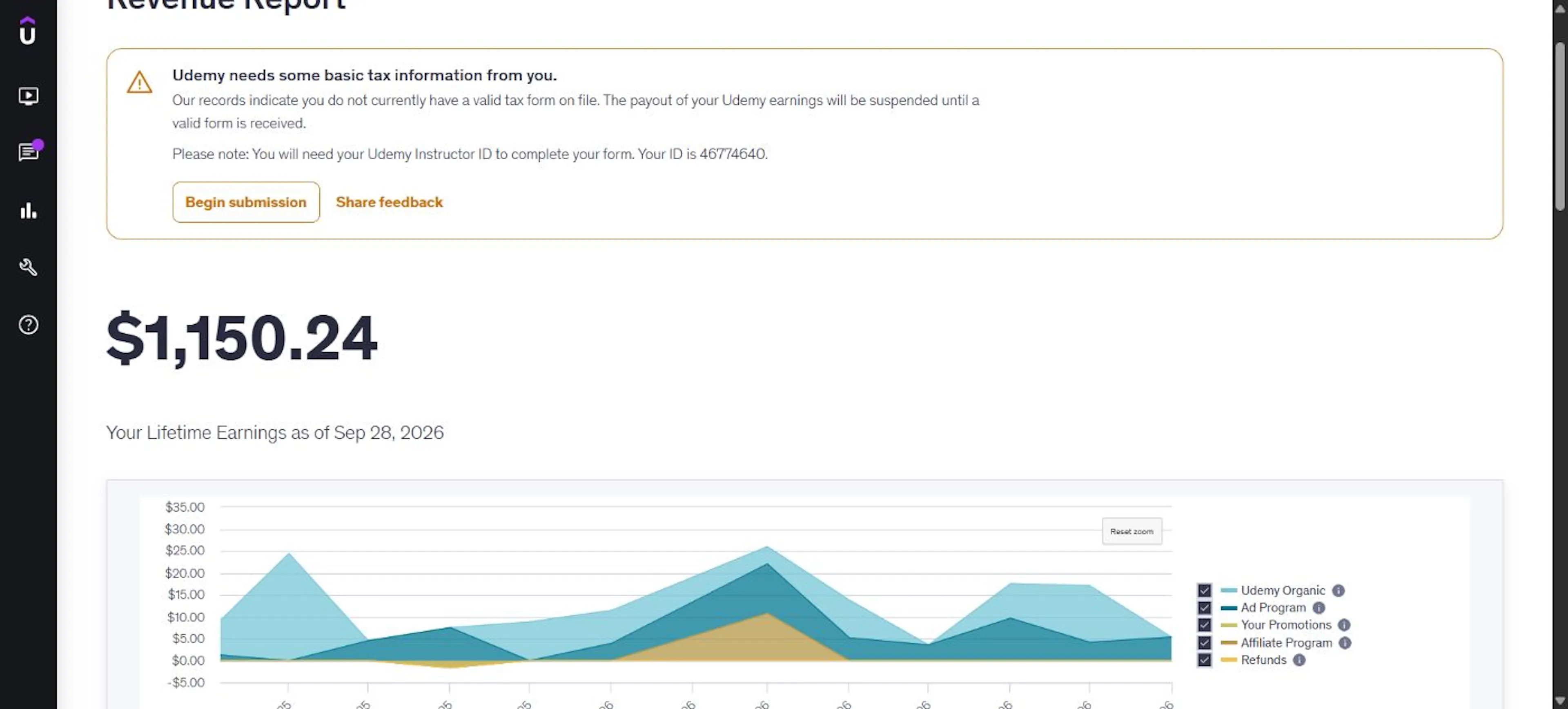
One day, the policy landscape shifted. Udemy sent out automated notices pushing creators to overhaul their courses to fit new marketplace algorithms and competitive guidelines. The ultimatum was stark: re-record and update your entire course trajectory immediately to meet their revised standard, or face complete account suspension and course blockage. For a solo builder managing competing life priorities, keeping up with arbitrary platform demands was impossible.
“If you build on someone else’s platform, you are essentially helping them build financial leverage. The moment their internal business goals or algorithmic preferences shift, your hard work becomes completely disposable.”
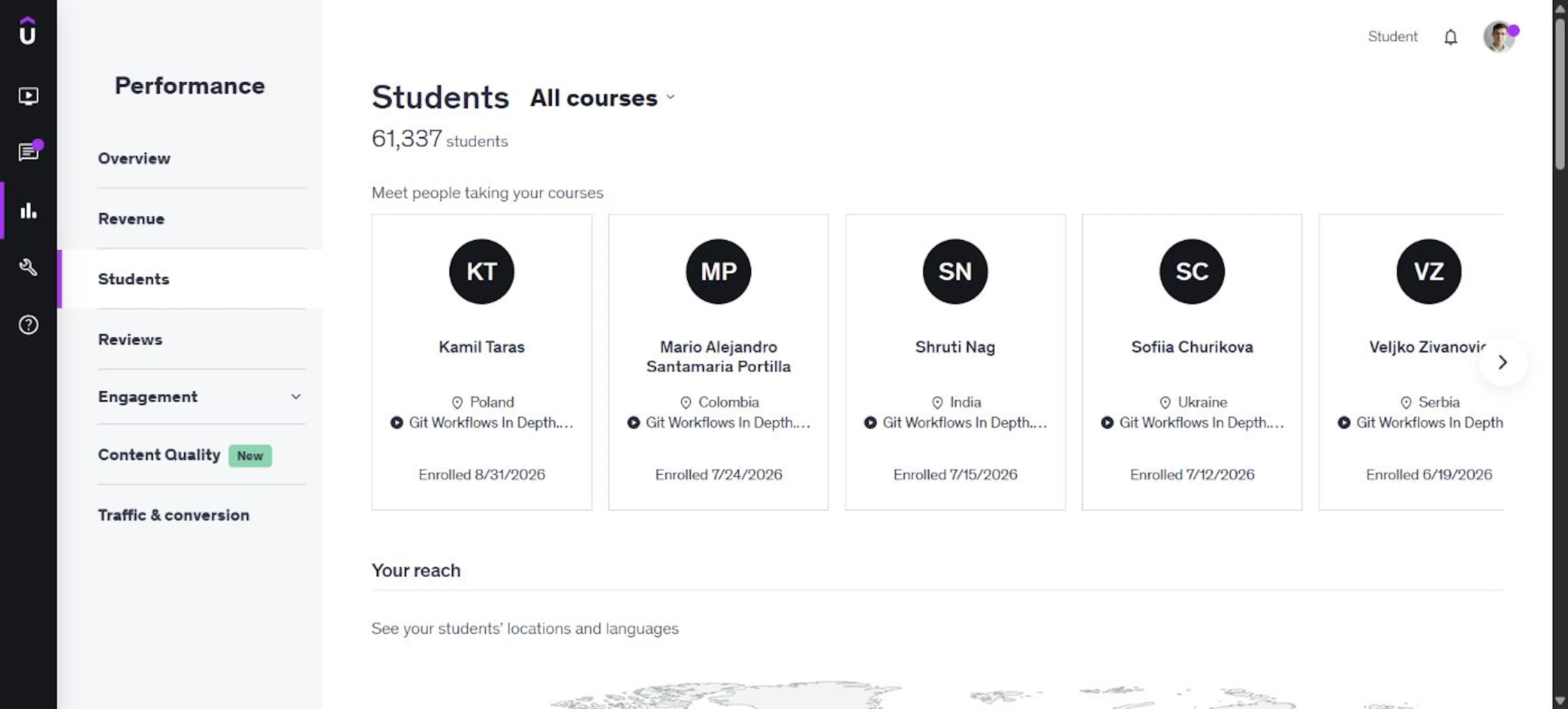
The course was subsequently blocked and unlisted from their search engine. While the raw video assets remained buried somewhere deep inside a private Amazon S3 bucket, the momentum, student trust, and structured delivery mechanism were obliterated overnight.
The lesson was deeply etched: relying on third-party centralized platforms leaves your intellectual output at the mercy of policy changes you cannot control or appeal. Yes its easier to upload the course on someone else platform, but you are not the ONE there.
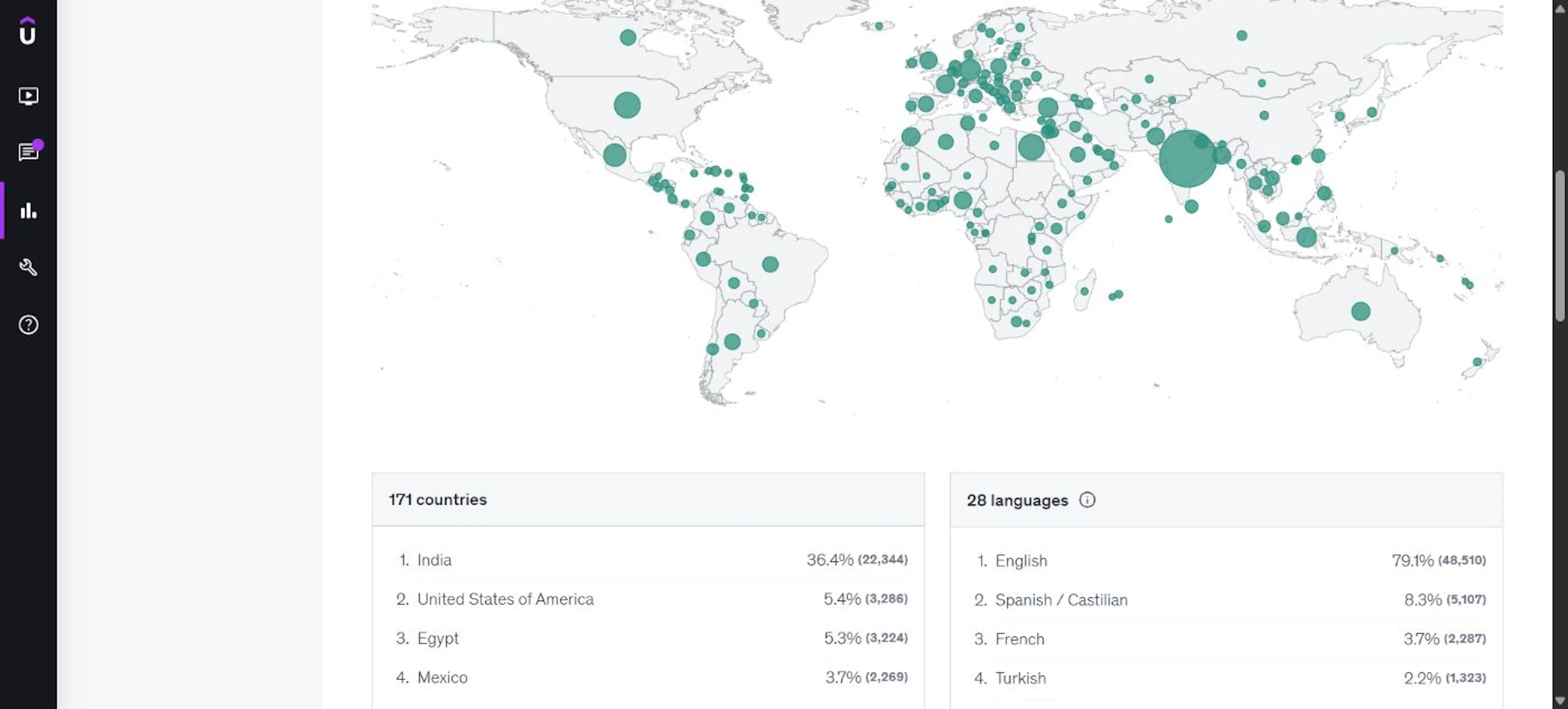
The Forgotten Repository in the Shadow of Reality
Four years ago, while laying the initial foundational architecture for my core startup project—LLazyEmail—I needed a fast, low-friction, developer-native channel to generate visibility and collect ecosystem data. In the GitHub universe, the “Awesome List” repository format is the gold standard for resource discovery.
Developers love clean, community-curated, markdown-driven lists that catalog frameworks, libraries, APIs, and best practices.
I created an Awesome Email Marketing List repository under our GitHub organization focused specifically on email marketing infrastructure, API integrations, deliverability mechanics, and developer tooling.
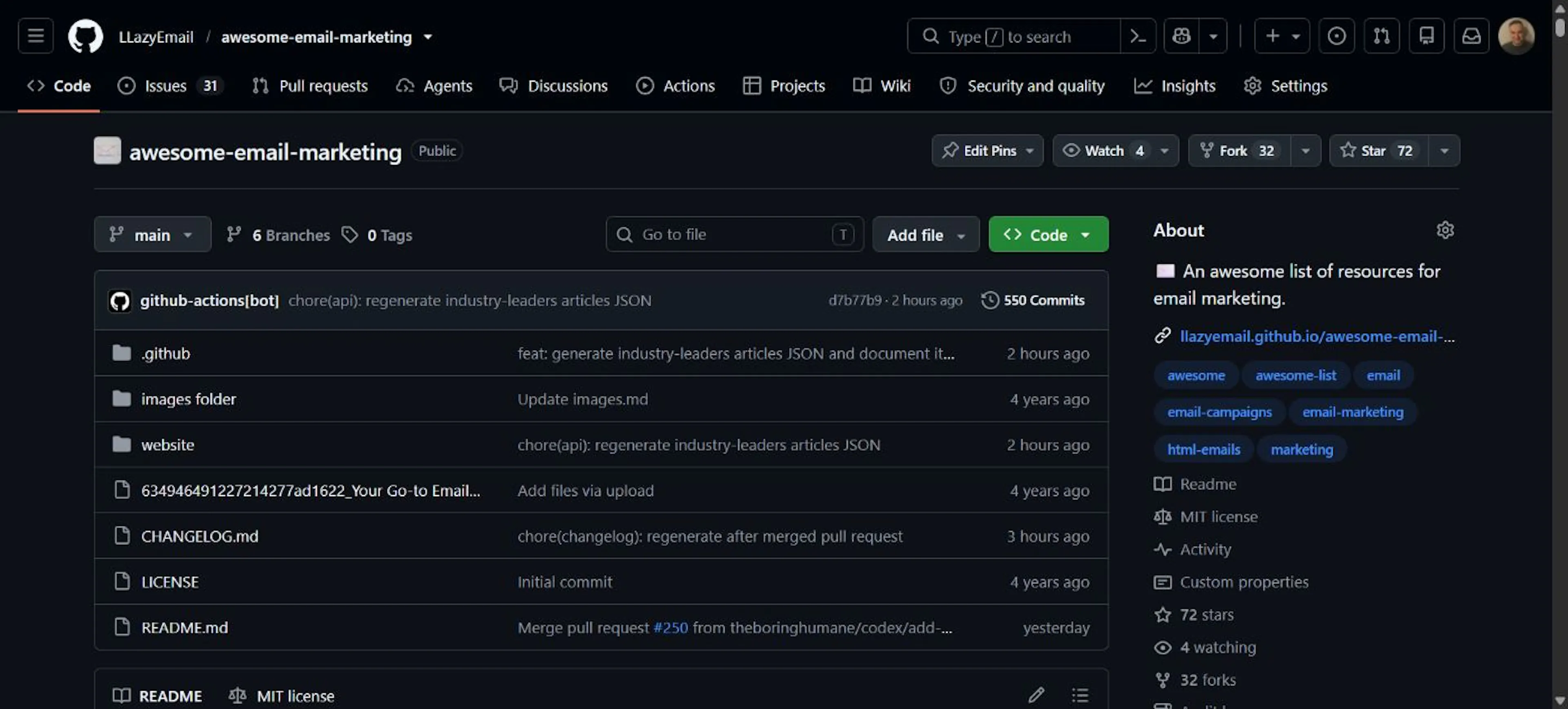
I spent endless hours formatting the raw markdown:
-
Structural Navigation: I designed a clean Table of Contents with jump links for rapid scanning.
-
Categorization: I separated tools into deliverability checkers, SMTP relay providers, transactional template builders, and analytics tools.
-
Curation & Reframing: I vetted every submission, rewriting descriptions so they were clear, concise, and focused on practical utility rather than marketing fluff.
I spent an incredible amount of time refining this single README.md file. But just as the project gained structure, the world outside exploded. War broke out in my homeland. My daily life, mental bandwidth, and operational capacity were entirely upended. Survival, family security, and processing the real-world chaos completely eclipsed coding side projects. The repository was left frozen in years, sitting completely untouched for over four consecutive years.
The Awakening: Returning to What You Love
Fast forward to a few months ago. In the middle of lingering stress and heavy real-world burdens, I found a small pocket of free time. My mind urgently needed a mental sanctuary—a familiar space where I could build, experiment, and reconnect with pure software craftsmanship without commercial pressure.
I wanted to get my hands dirty with the explosion of new AI development tools, LLMs, and agentic workflows.
But I didn’t want to start building a massive enterprise platform from scratch; I needed quick feedback loops and tangible momentum. I began auditing my personal digital assets and remembered the abandoned README.md.
Key Insight: The Power of Pre-Existing Content
Starting from scratch is the biggest enemy of developer momentum. Re-purposing structured, high-value content that you already own gives you an immediate head start, allowing you to focus entirely on modernizing the delivery architecture and integrating modern AI capabilities.
The raw information sitting in that static four-year-old markdown file was still fundamentally valuable. Email protocols (SMTP, IMAP), deliverability frameworks (SPF, DKIM, DMARC), and marketing mechanics hadn’t disappeared; they had evolved.
Instead of begging for marketplace visibility on third-party learning platforms, I realized I could transform this static text file into a modern, self-hosted, sovereign digital knowledge engine.
Laying the Groundwork for Total Digital Ownership
Reclaiming digital sovereignty meant taking a firm stance on stack architecture:
Zero Platform Lock-in: Everything must reside as raw, human-readable Markdown or MDX inside a standard Git repository.
Portable Build Pipeline: The site must compile into pure static HTML/CSS/JS, deployable anywhere—GitHub Pages, Vercel, Netlify, or AWS S3/CloudFront.
Full Data Autonomy: No algorithm can alter ranking, shadowban links, or impose arbitrary monetization requirements.
By shifting from a platform-dependent creator mindset to a self-hosted developer-publisher model, I set the stage for the next phase of the project: turning a single static text file into a multi-page, AI-optimized modern documentation platform.
P.S. Yeah, this website is currently sitting in GitHub Pages, so it’s just another platform that’s benefiting from my stuff – so I need to move out too.